
Day 2 - Panel Members
Prof Phil McGowan
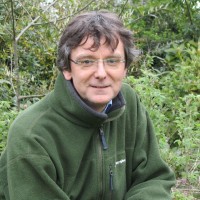
Phil is interested in research that can inform global policy on biodiversity and especially species conservation. He is particularly interested in looking more broadly and systematically at species research that has potential to inform both the development of policy and its effective implementation. Phil is Chair of the IUCN Species Survival Commission’s Global Biodiversity Framework Task Force that contributed to species aspects of the negotiations on the Convention on Biological Diversity’s Global Biodiversity Framework and which is now working to support implementation. He is also involved in promoting the potential of universities to advance the UN Sustainable Development Goals through sharing experience and understanding. He recently stepped down as the founding chair of the university's Sustainable Development Goals Committee.
He joined Newcastle University in 2013 having worked for many years in international species conservation. Phil conducted research on critically endangered species in Asia, Africa and South America, with a particular focus on the Galliformes, a highly threatened group of birds that includes pheasants, partridges, grouse and the wild ancestor of the chicken. 25% of Galliformes are currently at risk of extinction, typically because of people hunting them for food, and, because of this are thought to be important indicators of overall pressures facing bird species. All of this work was carried out with a large network, especially in Asia, conducting fieldwork in order to build better conservation projects and improve policy responses to increase biodiversity. He continues to work with a large global network and is committed to capacity development for species conservation research in areas where resources are limited, and biodiversity is under pressure.
Prof Clare Fitzsimmons

Clare’s background in environmental research, coupled with commercial experience gained in defence and marine consultancy sectors has given her a wide array of interests, unique analytical skills and familiarity with novel techniques not formerly applied to marine environmental issues. Although her expertise developed across several fields, a common theme is the analysis of complex systems. She now applies this to marine management and governance, primarily investigating human interactions with ecological systems.
Interested in the ways in which human activities and their organisation impact upon the marine environment; she focuses on understanding governance systems to support decision making for natural resource management, and associated values and trade-offs made at multiple scales. Current research is developing novel social network analysis and futures techniques to explore marine resource management and governance through large-scale regional work across the Caribbean (EC FP7; Defra). She also sustains a successful local ecological programme. This aims to provide management relevant research to support the new inshore conservation obligations of local Inshore Fisheries and Conservation Authorities (IFCAs) and centres on high value local crustacea stocks, associated habitats and fishing behaviour. It attracts multiple funders (NERC, Cefas, Natural England, NIFCA, the Marine Management Organisation).